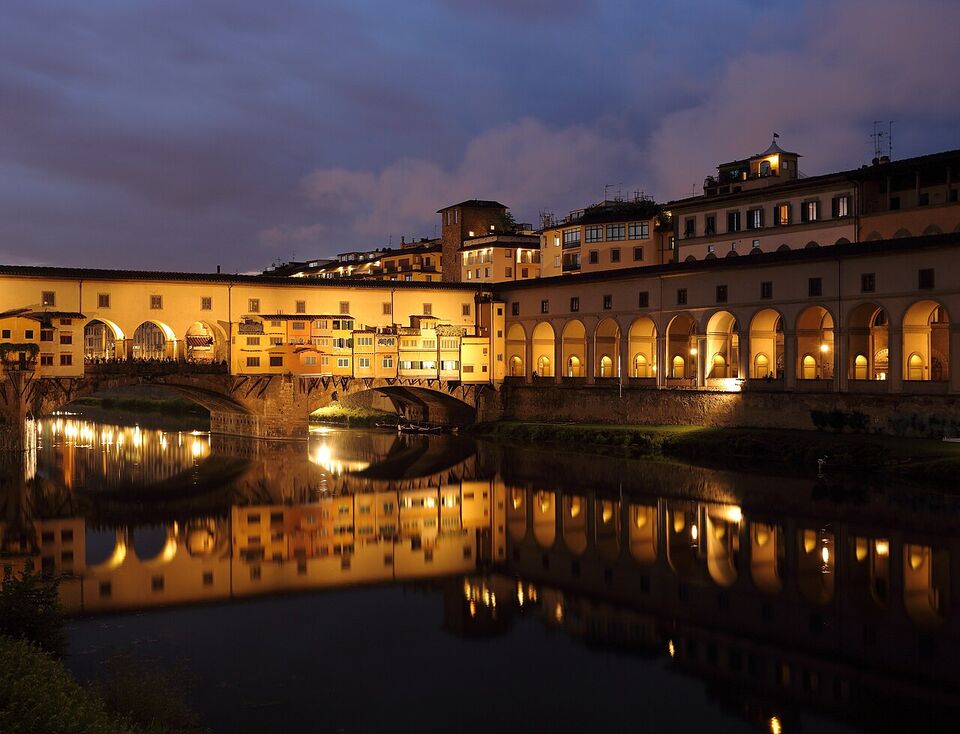
For a first trip, spend 7 days in Rome and Florence, 10 days in Rome, Florence and Venice, or 14 days adding Naples and Pompeii, all by fast train with no car. Each route below keeps you to two nights or more per base, puts the timed tickets in the right order and works in any season, with notes for winter, when the coast is closed and the cities are at their cheapest.
Count nights, not days. A "10-day trip" that leaves the US on a Friday evening and flies home the second Sunday gives you nine nights in Italy, and the first day is jet-lagged. Overnight flights land between about 7 and 10 a.m., and hotel rooms are rarely ready before 2 or 3 p.m.
Which length is right
| Trip | Route | Nights | Fly | Best for | What you give up |
|---|---|---|---|---|---|
| 7 days | Rome, Florence | Rome 3, Florence 3 | Into Rome; home from Rome or Florence | A first taste, a long-weekend-plus | Venice, and any slack for rain |
| 10 days | Venice, Florence, Rome | Venice 2, Florence 3, Rome 4 | Into Venice, home from Rome (or reverse) | The classic first trip | The south and the countryside |
| 14 days | Venice, Florence, Naples, Rome | Venice 3, Florence 4, Naples 2, Rome 4 | Into Venice, home from Rome | A fuller first trip with Pompeii and day trips | Nothing essential; the Amalfi Coast swaps in from May to September |
An open-jaw ticket (into one city, out of another) usually costs about the same as a round trip and saves a day of backtracking; see flights. If you are weighing other regions, our planning page has routes for the Amalfi Coast, Tuscany by car, the lakes and Dolomites, Sicily and Puglia, and the trip builder lets you sketch your own.
7 days: Rome and Florence
Six nights: three in Rome, three in Florence. The two cities are 1 hour 30 minutes apart by Frecciarossa or Italo, city center to city center.
- Day 1
Arrive in Rome
Leonardo Express from Fiumicino to Termini (32 minutes, €14, about $16) or the €55 (about $62) fixed-fare taxi to anywhere inside the Aurelian Walls. Drop your bags and stay awake with an easy walk: the Pantheon, Piazza Navona, then an early dinner in the lanes around Campo de' Fiori.
- Day 2
Ancient Rome
Morning: Colosseum on a timed, named ticket (bring passports), then the Roman Forum and Palatine Hill on the same ticket, 3 to 4 hours in all. Afternoon: lunch in Monti, 10 minutes' walk, then the Capitoline Hill. Evening: dinner in the Jewish Ghetto.
- Day 3
The Vatican
Morning: the earliest Vatican Museums slot you can get (closed most Sundays), about three hours ending in the Sistine Chapel, then St. Peter's Basilica (free). Afternoon: Trevi Fountain (€2 for the basin area) and the Spanish Steps. Evening: Trastevere, by Tram 8 from Largo Argentina or a 20-minute walk.
- Day 4
Rome to Florence
Morning: one last Roman coffee and a mid-morning fast train, about 1 hour 30 minutes, to Firenze Santa Maria Novella. Afternoon: walk to the Duomo and the Ponte Vecchio, 10 to 15 minutes. Evening: climb to Piazzale Michelangelo for sunset (around 5 p.m. in winter), then dinner in the Oltrarno.
- Day 5
Florence's great art
Morning: the Uffizi from 8:15 a.m. (closed Mondays), 2 to 3 hours for Botticelli, Leonardo and Caravaggio. Lunch at the Mercato Centrale in San Lorenzo. Afternoon: your Accademia slot for Michelangelo's David, about an hour. Evening: a walk along the Arno.
- Day 6
The Duomo, or a Tuscan day
Morning: climb Brunelleschi's dome on a reserved slot, then the Baptistery and cathedral museum on the same pass. Afternoon: Santa Croce or the Pitti Palace and Boboli Gardens. Or spend the day in Siena, often quicker by bus than by train; see Tuscany.
- Day 7
Fly home
Fly from Florence or Pisa through a European hub, or take an early fast train back to Rome for an afternoon flight from Fiumicino. Allow at least 3 hours at the airport for an international departure.
Want more Rome detail? Our 3 days in Rome plan expands days 1 to 3 hour by hour, and Rome vs Florence helps if you are tempted to give one city all seven days.
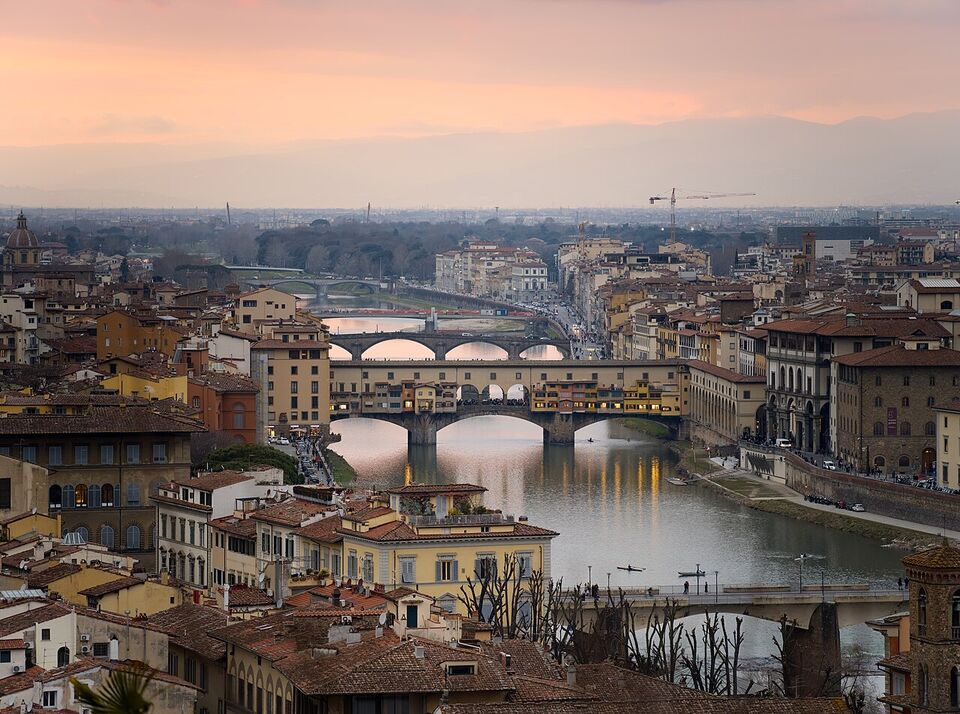
10 days: Venice, Florence and Rome
Nine nights: two in Venice, three in Florence, four in Rome. This runs north to south so you end in Rome, which has the most nonstop flights to the US; the reverse works just as well. Our planning page has the same route starting in Rome.
- Day 1
Arrive in Venice
From Marco Polo airport, the ATVO or ACTV bus reaches Piazzale Roma in about 20 to 30 minutes, or take the slower Alilaguna boat across the lagoon. Check in, then ride vaporetto Line 1 down the Grand Canal at dusk. Dinner on cicchetti (Venetian bar snacks) in Cannaregio.
- Day 2
San Marco and the islands
Morning: St. Mark's Basilica on a timed slot (€10, about $11) and the Doge's Palace, 2 to 3 hours. Afternoon: vaporetto to Murano and Burano, or get lost in Castello and Dorsoduro. Evening: an ombra (small glass of wine) in a bacaro (wine bar), after the day-trippers have gone.
- Day 3
Venice to Florence
Morning: the Rialto market (fish Tuesday to Saturday) and the Frari church. Midday train from Venezia Santa Lucia, about 2 hours, to Florence. Afternoon: the Duomo square and the Ponte Vecchio. Evening: Piazzale Michelangelo, then dinner near Santo Spirito.
- Day 4
Florence's great art
Uffizi in the morning, lunch at the Mercato Centrale, Accademia in the afternoon. Both close on Mondays, so do not put this day on one.
- Day 5
The Duomo, or Siena
Brunelleschi's dome early, then the Oltrarno's workshops. Or a day in Siena, or Lucca and Pisa by regional train. Bologna is 35 minutes away by fast train if food matters more than towers; see Bologna and Emilia.
- Day 6
Florence to Rome
Morning fast train, about 1 hour 30 minutes, to Termini. Afternoon: the Pantheon (€7, about $8), San Luigi dei Francesi's Caravaggios and Piazza Navona. Evening: the Trevi Fountain after 10 p.m., when it is free and quieter.
- Day 7
Ancient Rome
Colosseum at opening, the Forum and Palatine, lunch in Monti, the Capitoline Hill late afternoon, dinner in the Jewish Ghetto.
- Day 8
The Vatican
Vatican Museums and the Sistine Chapel on an early slot, St. Peter's Basilica, lunch in Prati, then Castel Sant'Angelo and the walk back across Ponte Sant'Angelo.
- Day 9
Borghese and Trastevere, or a day trip
A two-hour slot at the Borghese Gallery (closed Mondays), the Pincio terrace and the Spanish Steps, then dinner in Trastevere. Or Ostia Antica, about 25 minutes by train, or Orvieto; see day trips from Rome.
- Day 10
Fly home
Leonardo Express or taxi to Fiumicino. Allow at least 3 hours before an international departure.
Insider tip
Sleeping in Venice exempts you from the day-tripper access fee, which is not charged in winter and returns on set days from March 26, 2027. You still pay the city tourist tax at your hotel. Get off the train at Venezia Santa Lucia, not Mestre, which is on the mainland. See Venice.
14 days: Venice, Florence, Naples and Rome
Thirteen nights in four bases: Venice 3, Florence 4, Naples 2, Rome 4. The extra nights buy you slow mornings, two Tuscan day trips and Pompeii, without adding a fifth hotel.
- Day 1
Arrive in Venice
Bus or boat from Marco Polo, a Grand Canal ride on vaporetto Line 1, an early dinner.
- Day 2
San Marco
St. Mark's Basilica and the Doge's Palace in the morning (book the palace 30 or more days ahead for the lower online price). Afternoon in Dorsoduro, with the Accademia gallery and the Zattere waterfront at sunset.
- Day 3
The lagoon
Murano's glass furnaces and Burano's painted houses by vaporetto, back for the Rialto and a cicchetti crawl in San Polo.
- Day 4
Venice to Florence
Train of about 2 hours. Afternoon at the Duomo square and the Ponte Vecchio, sunset at Piazzale Michelangelo.
- Day 5
Uffizi and Accademia
The two big museums on timed slots, with lunch at the Mercato Centrale between them. Not on a Monday.
- Day 6
Siena
The train takes about 1 hour 30 minutes, sometimes with a change at Empoli; buses are often quicker. Piazza del Campo, the Duomo and the Facciatone view, back to Florence for dinner. In spring and fall a small-group tour adds San Gimignano or Chianti tastings.
- Day 7
The Duomo and the Oltrarno
Brunelleschi's dome on a reserved slot, the Baptistery and cathedral museum, then the Pitti Palace or Boboli Gardens and an evening on Piazza Santo Spirito. Or swap in Bologna for the day.
- Day 8
Florence to Naples
Direct fast train, about 3 hours, through Rome to Napoli Centrale. Afternoon walk along Spaccanapoli and Via San Gregorio Armeno, the nativity-workshop street. Pizza for dinner: Naples is its home and the cheapest place in Italy to eat it.
- Day 9
Pompeii
Circumvesuviana train to Pompei Scavi, then four to five hours in the ruins. Tickets are named and cost €20 (about $22) Express or €25 (about $28) Plus; in winter the site opens at 9 a.m. with last entry 3:30 p.m. Add Herculaneum (€16, about $18) if you have energy. See Naples and Pompeii.
- Day 10
Naples to Rome
Fast train of about 1 hour 10 minutes. Afternoon at the Pantheon and Piazza Navona, evening at the Trevi Fountain.
- Day 11
Ancient Rome
Colosseum, Forum and Palatine, lunch in Monti, Capitoline Hill, dinner in the Ghetto.
- Day 12
The Vatican
Museums, Sistine Chapel and St. Peter's, with the dome climb if your legs agree. Evening in Prati or around Navona.
- Day 13
Borghese and Trastevere
The Borghese in the morning, then Trastevere and the Gianicolo view. On a Sunday, ride the Appian Way instead.
- Day 14
Fly home
To Fiumicino by train or fixed-fare taxi.
Watch out
Naples Capodichino airport is closed for runway works from November 1 to 30, 2026. If you planned to fly in or out of Naples this month, check your airline; Rome and Salerno are the likely alternatives.
Swaps by season
- May to September: replace Naples with three nights on the Amalfi Coast or in Sorrento, seeing Pompeii on the way; see Amalfi Coast. Or replace two Florence nights with the Cinque Terre.
- July and August: consider the cooler north instead of the south: Lake Como and the Dolomites.
- Late November to early January: swap Naples for two nights in Bolzano for the Christmas markets, about 1 hour 30 minutes by train from Verona; see Christmas markets in Italy.
What to book now
| Ticket | How far ahead | Official site | Price (2026) |
|---|---|---|---|
| Fast trains | As soon as dates are firm; sales open about four months out | trenitalia.com, italotreno.com | Dynamic; cheapest fares sell first |
| Colosseum, Forum, Palatine | Exactly 30 days before | ticketing.colosseo.it | €18 (about $20); Full Experience €24 (about $27) |
| Vatican Museums | Weeks ahead in spring, summer and holidays; days ahead in winter | tickets.museivaticani.va | €25 (about $28) online |
| Borghese Gallery | About six weeks | galleriaborghese.cultura.gov.it | About €18 (about $20) |
| Uffizi | Several weeks for April–October | uffizi.it | €29 (about $32) in advance, €25 on the day (March to October rates; check winter prices) |
| Accademia | Several weeks in season | galleriaaccademiafirenze.it | €16 (about $18) plus €4 reservation |
| Duomo (Brunelleschi Pass with dome) | Book first in Florence; the dome sells out | Opera del Duomo official site | €30 (about $34) |
| Doge's Palace | 30+ days for the lower price | Venice civic museums | €30 (about $34) online 30+ days ahead |
| St. Mark's Basilica | A few days | basilicasanmarco.it | €10 (about $11) |
| Pompeii | A few days; named tickets | pompeiisites.org | €20 (about $22) Express, €25 (about $28) Plus |
Book in this order: flights, hotels, fast trains, then the timed sights as their windows open. The Colosseum tickets page explains the release rules and the reseller sites to avoid.
What each trip costs
Our money page puts a mid-range trip at about €200–300 (about $224–336) per person per day, including a shared $$ hotel, food, local transport, sights and a share of the trains. Budget travelers spend about €100–140 and comfort travelers €400–600. Multiplied out, per person, before flights:
| Per person | Budget | Mid-range | Comfort |
|---|---|---|---|
| 7 days | €700–980 (about $784–1,098) | €1,400–2,100 (about $1,568–2,352) | €2,800–4,200 (about $3,136–4,704) |
| 10 days | €1,000–1,400 (about $1,120–1,568) | €2,000–3,000 (about $2,240–3,360) | €4,000–6,000 (about $4,480–6,720) |
| 14 days | €1,400–1,960 (about $1,568–2,195) | €2,800–4,200 (about $3,136–4,704) | €5,600–8,400 (about $6,272–9,408) |
The money page's worked 10-day Rome, Florence and Venice trip for two in May or September comes to about €3,900 (about $4,370) before flights, including about €300 for two high-speed trains, an airport transfer and local transport. Venice runs 30 to 50 percent higher in summer, Naples noticeably lower, and winter city hotels can be about a third cheaper. City tourist taxes are extra, paid at each hotel. Run your own numbers in the budget calculator.
How the trains work
- Two companies, same tracks. Trenitalia's Frecciarossa and the private Italo run the high-speed lines with nearly identical times. Tickets are not interchangeable; compare both and buy the better fare.
- Seats are assigned on fast trains, and luggage goes on racks at the end of each car or overhead. Pack so you can lift your own bag.
- Stations. Rome: Termini (most trains) or Tiburtina. Florence: Santa Maria Novella. Venice: Santa Lucia, not Mestre. Naples: Napoli Centrale.
- Regional trains (for Siena, Lucca, Pisa, Ostia Antica) have fixed low fares and no seat reservation; validate paper tickets before you board.
- Strikes happen several times a year and are announced in advance, with guaranteed services in the busiest hours. Check the official calendar before travel days; see getting around.
Where to stay on these routes
Stay central in every city: you will walk to the sights and back for an afternoon rest. In Rome, the Centro Storico or Monti (see where to stay in Rome); in Florence, around the Duomo or Santa Croce, or the Oltrarno for a quieter neighborhood; in Venice, San Marco or Castello for the sights, Cannaregio or San Polo for value; in Naples, near the historic center or the waterfront. Book spring and fall hotels four to six months ahead; for general advice on hotels, apartments and taxes, see where to stay in Italy.
These routes in winter
From November to March the three-city routes work well, at lower prices and with shorter lines, but plan around a few things:
- Short days. Sunset is around 5 p.m. in November and 4:40 p.m. in late December. The Colosseum closes at 4:30 p.m. until February 28, 2027, and Pompeii at 5 p.m. Sightsee from opening time.
- Holiday closures. December 25 and January 1 close the Colosseum, the Vatican Museums, Pompeii and most museums. The Vatican Museums also close December 8 and 26 and January 6. Build travel days around them.
- High water in Venice. Acqua alta is most likely from October to December. Bring waterproof shoes, and check the tide forecast.
- Christmas to Epiphany (January 6) is peak season in Rome; book hotels and trains early. See Italy in December and Italy in January.
- Rain. November is the wettest month in much of Italy; see Italy in November.
Mistakes to avoid
- Too many bases. Every hotel change costs about half a day. Adding Milan, Cinque Terre and Pisa to a 10-day trip means seeing all of them badly.
- A day trip to Venice. You see only the crowds; the city empties and changes in the evening.
- Driving in the cities. Rome, Florence and the other centers are camera-enforced ZTLs that mail fines months later. Rent a car only for the countryside; see driving.
- Monday museums in Florence, Sunday at the Vatican, Monday at the Borghese.
- Buying tickets from resellers that look official. Use the sites in the table above.
- Planning a big sight on arrival day. Keep it light and get to bed early.
Bottom line
Seven days is a good first look at Rome and Florence; ten days with Venice is the classic, and fourteen days adds Pompeii and the south at a pace that still leaves room to sit in a piazza. Fly open-jaw, take the train, book the Colosseum and the Florence museums as their windows open, and keep three or four nights for Rome on every version.
Want this planned for you? Tell us your dates and we will build the route, trains and tickets around them. Planning France too? See our France itinerary.
Add it to a route in the trip builder, or ask us to plan the hotels, trains and guides for you.