Paris at a glance
Paris is compact, dense and built for walking. Inside its ring road it covers about 41 square miles, and the classic sights from the Eiffel Tower to Notre-Dame line up along a single river. Almost everything a first-time visitor wants to see sits within a 2-mile (3 km) radius of the Île de la Cité.
What surprises most Americans is how residential it feels. Even in the center, people live above the cafés, kids walk to school past the Louvre, and each neighborhood has its own bakery, butcher, market and corner bistro. Picking the right neighborhood to stay in shapes your trip more than any single sight.
This page covers the city's layout, all 20 arrondissements, where to stay, sample itineraries and the everyday practicalities. For details, see sights and museums, getting around, eating and drinking, shopping and nightlife, Paris with kids and free things and day trips.
How Paris is laid out
The river and its banks
The Seine flows through Paris from east to west in a wide arc. Everything north of it is the Right Bank (Rive Droite) and everything south is the Left Bank (Rive Gauche). The Right Bank is bigger and busier, home to the Louvre, the Marais, the Champs-Élysées, the department stores and Montmartre. The Left Bank holds the Eiffel Tower, the Musée d'Orsay, the Latin Quarter and Saint-Germain, and has a reputation as the intellectual, literary side of town.
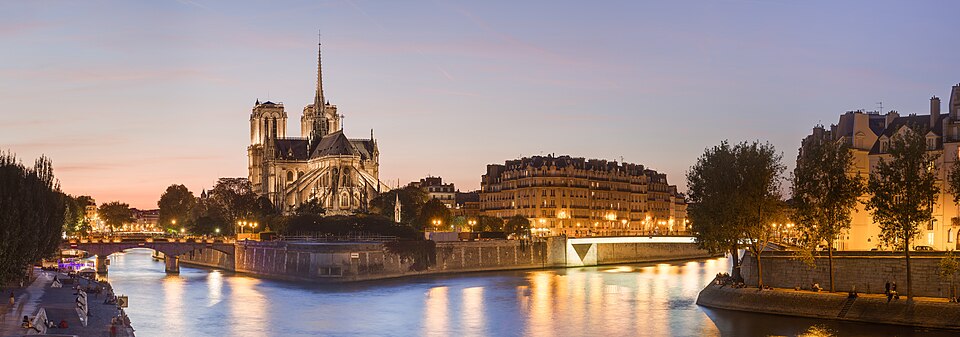
In the middle of the river sit two islands. The Île de la Cité is where Paris began over 2,000 years ago; it holds Notre-Dame, Sainte-Chapelle, the Conciergerie and the Palais de Justice. Next door, the smaller Île Saint-Louis is a quiet grid of 17th-century townhouses, ice cream shops (Berthillon is the famous one) and riverside benches. The two are joined by a footbridge, the Pont Saint-Louis, where street musicians often play.
The arrondissement snail
Paris is divided into 20 districts called arrondissements. They start with the 1st at the Louvre and spiral outward clockwise like a snail shell, ending with the 20th on the eastern edge. Parisians refer to them by number ("I live in the 11th"), and the last two digits of the postal code tell you which one an address is in: 75006 is the 6th, 75018 the 18th. The 16th has two codes, 75016 and 75116.
The rule of thumb: the low numbers (1st to 8th) are central, historic and expensive, while the higher numbers (9th to 20th) are more residential, livelier at night and better value. The ring of 12th to 20th also has the big parks and much of the city's new energy.
Edges, size and walkability
The city stops at the Boulevard Périphérique, a ring highway. Beyond it are separate towns, the "banlieue", even when the buildings look continuous. Two huge wooded parks count as part of Paris: the Bois de Boulogne on the west side and the Bois de Vincennes on the east.
You can walk across the whole city in about three hours. The stroll from the Louvre to the Eiffel Tower along the Seine is roughly 2.5 miles (4 km). Most visitors cover 8–12 miles (13–19 km) a day on foot, so comfortable shoes matter more than any outfit. See getting around Paris for the Métro, buses and bikes.
Insider tip
Paris street signs are blue enamel plaques on the corners of buildings, with the arrondissement number above the street name. House numbers on streets running away from the Seine start at the river end; on streets parallel to it, they start at the upstream (east) end. Even numbers are on the right as the numbers rise.
Neighborhood guide: all 20 arrondissements
Here is what each arrondissement is like, what is there, who it suits and what to watch for. Neighborhood names (the Marais, Saint-Germain, Montmartre) often straddle two arrondissements, so you will see some overlap.
The center: 1st to 4th
1st · Louvre and Les Halles
The historic core: the Louvre, the Tuileries Garden, the Palais-Royal and its arcades, Place Vendôme and the luxury shops of Rue Saint-Honoré. The eastern end around Les Halles is a big shopping hub with the Bourse de Commerce art museum. Best for first-timers who want to walk everywhere. Downsides: few real residents, quiet and pricey around the Louvre, and the Les Halles area feels scruffy late at night.
2nd · Bourse and Sentier
The smallest arrondissement, packed with 19th-century covered passages (Galerie Vivienne, Passage des Panoramas), the pedestrian market street Rue Montorgueil, and a growing number of good restaurants and cocktail bars. Best for food lovers and couples who want central and lively. Downsides: few big sights, and the stretch of Rue Saint-Denis near the boulevards is still a little seedy.
3rd · Upper Marais
The northern Marais has narrow streets of independent boutiques, the Musée Picasso, the Musée Carnavalet (the free Paris history museum), the Musée des Arts et Métiers, and the Marché des Enfants Rouges, the oldest covered market in Paris. Best for couples, shoppers and repeat visitors. Downsides: hotel rooms are small and expensive, and Saturday afternoons get crowded.
4th · Marais, the islands and Notre-Dame
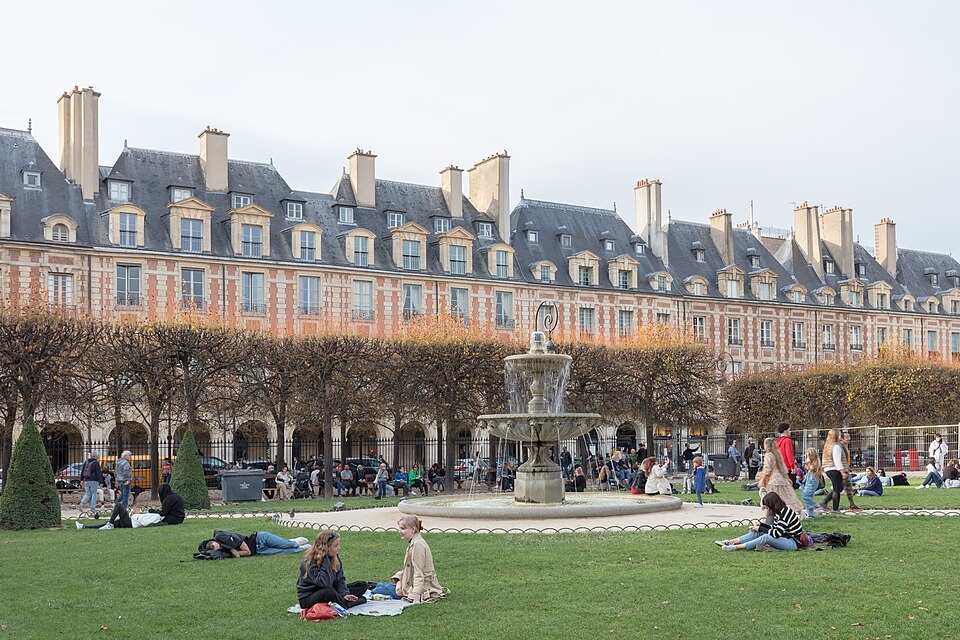
Notre-Dame and the eastern half of the Île de la Cité, the Île Saint-Louis, the Hôtel de Ville, Place des Vosges, the historic Jewish quarter around Rue des Rosiers (falafel lines), and the heart of gay Paris. The Centre Pompidou is here but closed for renovation until 2030. Best for first-timers, LGBTQ+ travelers and anyone who wants energy day and night. Downsides: noisy on weekend nights and packed on Sundays, when it is one of the few areas with shops open.
The Left Bank core: 5th to 7th
5th · Latin Quarter
The old university district: the Sorbonne, the Panthéon, the Musée de Cluny (medieval art, including the Lady and the Unicorn tapestries), the Jardin des Plantes with its natural history galleries and small zoo, the Roman Arènes de Lutèce, Shakespeare and Company bookshop, and the market street Rue Mouffetard. Best for families, students and first-timers on a mid-range budget. Downsides: the lanes around Rue de la Huchette are lined with tourist-trap restaurants with photo menus.
6th · Saint-Germain-des-Prés and Luxembourg
The Paris of the movies: the Luxembourg Gardens, the church of Saint-Sulpice, the literary cafés Café de Flore and Les Deux Magots, art galleries, chocolate shops and designer boutiques. Best for honeymooners, couples, luxury travelers and anyone who wants classic charm with good Métro links. Downsides: among the most expensive areas for hotels and dining, and quieter at night than it once was.
7th · Eiffel Tower and Invalides
Grand, leafy and residential, with the Eiffel Tower and Champ de Mars, the Invalides with Napoleon's tomb, the Musée d'Orsay, the Musée Rodin, the Musée du Quai Branly and the food shops of Rue Cler. Best for families and travelers who want calm evenings and a tower view. Downsides: quiet at night with little nightlife, government ministries take up whole blocks, and Métro rides to the east side are long.
The grand Right Bank: 8th to 10th
8th · Champs-Élysées
The Champs-Élysées, the Arc de Triomphe, the Grand Palais and Petit Palais, the Madeleine church, the luxury "Golden Triangle" of Avenue Montaigne, the Élysée Palace, Parc Monceau and the Musée Jacquemart-André. Many of the city's palace hotels are here. Best for luxury travelers and serious shoppers. Downsides: it is a business district with chain stores, empty on weekend evenings away from the Champs, and short on everyday neighborhood life.
9th · Opéra and South Pigalle
The Palais Garnier opera house and the flagship Galeries Lafayette and Printemps department stores in the south; in the north, the hip area called SoPi (South Pigalle) with Rue des Martyrs, wine bars and cocktail spots. Great transit links. Best for nightlife, shoppers and travelers who want value close to the center. Downsides: department-store crowds, and the boulevard at Pigalle itself still has sex shops and hustlers.
10th · Canal Saint-Martin and the stations
Young and creative: the tree-lined Canal Saint-Martin with its iron footbridges, the restaurants of Rue du Faubourg Saint-Denis, the Indian and Sri Lankan shops of Passage Brady, and two big rail hubs, Gare du Nord and Gare de l'Est. Best for younger travelers, foodies and people taking the Eurostar. Downsides: the blocks right around Gare du Nord and the Stalingrad area feel rough, especially at night.
The lively east: 11th and 12th
11th · Oberkampf and Bastille
One of the densest neighborhoods in Europe and the center of Paris dining and drinking: Rue Oberkampf, Rue Jean-Pierre-Timbaud, Rue de Charonne, natural wine bars and many of the city's most talked-about bistros. Best for nightlife, food lovers and good-value hotels. Downsides: almost no classic sights, and street-facing rooms can be loud until late.
12th · Bastille, Bercy and Vincennes
The Opéra Bastille, the Marché d'Aligre (one of the cheapest and best markets in town), the Coulée Verte René-Dumont (the elevated park that inspired New York's High Line), Gare de Lyon, Bercy Park and its old wine warehouses, and the edge of the Bois de Vincennes. Best for families, budget travelers and long stays. Downsides: farther from the main sights and not much atmosphere around Bercy at night.
The southern Left Bank: 13th to 15th
13th · Chinatown and Butte-aux-Cailles
Paris's main Asian quarter around Avenue de Choisy and the Olympiades towers, huge street-art murals along Boulevard Vincent-Auriol, the national library (BnF), and the village-like Butte-aux-Cailles hill with cheap bars. Best for budget travelers and food explorers. Downsides: lots of 1970s high-rises, and it is a Métro ride from the classic sights.
14th · Montparnasse and Denfert
The old artists' quarter of Montparnasse (shared with the 6th and 15th), the Catacombs entrance at Denfert-Rochereau, Montparnasse Cemetery, the market street Rue Daguerre and the lovely Parc Montsouris. Best for budget travelers and people who want a local feel. Downsides: some dull stretches, and the area right around Gare Montparnasse is all traffic.
15th · Residential Paris
The largest and most populous arrondissement, mostly residential, with Parc André-Citroën and its tethered balloon ride, the riverside Île aux Cygnes with a small Statue of Liberty replica, the Montparnasse Tower (its observation deck closed for renovation in March 2026, likely until 2030), and shopping streets like Rue du Commerce. Best for families and long stays near the Eiffel Tower. Downsides: sleepy at night and short on character in places.
The west and north: 16th to 18th
16th · Trocadéro and Passy
Wealthy and quiet, with the best Eiffel Tower views from the Trocadéro, the Musée Marmottan Monet, the Palais de Tokyo and the free Musée d'Art Moderne de Paris, the Fondation Louis Vuitton on the edge of the Bois de Boulogne, and the Roland-Garros tennis stadium. Best for families and luxury travelers who want calm. Downsides: little nightlife, a buttoned-up feel, and long rides to the east side.
17th · Batignolles
A mix of grand Haussmann apartments near Parc Monceau and the villagey Batignolles quarter, with an organic market, cafés and the modern Clichy-Batignolles eco-district around Martin Luther King Park and the glass Paris courthouse. Best for long stays and travelers who want to live like a local. Downsides: few sights, and the area around Porte Maillot is a traffic hub.
18th · Montmartre
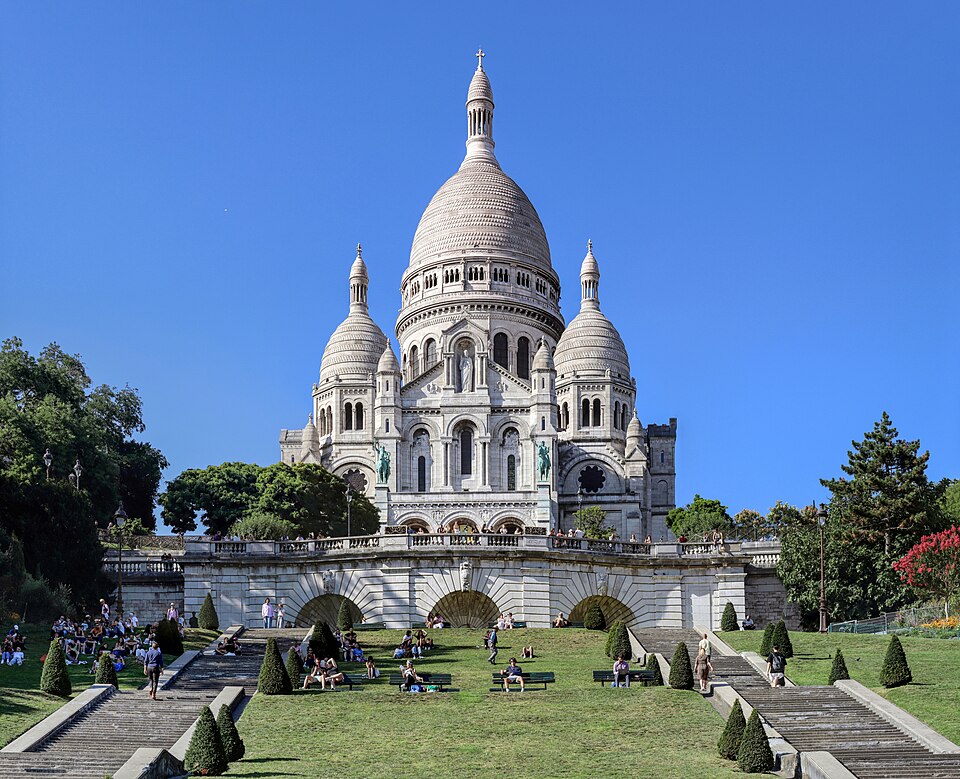
The hilltop village of Montmartre with Sacré-Cœur, Place du Tertre's painters, the Musée de Montmartre, vineyards and steep stairways; the Moulin Rouge at its foot; the Abbesses area for cafés; and Goutte d'Or, the West African quarter, to the east. Best for romance, views and character at decent prices. Downsides: steep climbs with luggage, crowds and scams on the Sacré-Cœur steps, and the Barbès and La Chapelle areas can be uncomfortable at night.
The northeast: 19th and 20th
19th · Buttes-Chaumont and La Villette
Parc des Buttes-Chaumont, the most dramatic park in Paris with cliffs and a temple on a crag; the Bassin de la Villette canal basin; and the Parc de la Villette with the Cité des Sciences science museum and the Philharmonie concert hall. Best for families (science museum and playgrounds) and budget travelers. Downsides: far from the center, and some areas near Stalingrad and the outer boulevards are rough.
20th · Belleville and Père-Lachaise
Père-Lachaise Cemetery, multicultural Belleville with Chinese and North African eateries, the city views from Parc de Belleville, street-art lanes like Rue Dénoyez, and the bars of Ménilmontant. Best for budget travelers, artists and night owls. Downsides: a long way from most sights, and hilly.
Different from home
In many US cities, the outer areas mean suburbs and safety. In Paris it is the reverse: the city proper is generally safe, the wealthiest areas are central and west, and the suburbs just outside the ring road include some of the poorest communities in France. "Banlieue" does not mean leafy suburb.
Where to stay in Paris
For a first trip, stay inside the city limits and within a short walk of a Métro station, ideally one with several lines. A central location saves you hours over a cheaper hotel at the edge. For booking strategy, apartments versus hotels and short-term rental rules, see where to stay in France.
Best areas by traveler
| You are | Best areas | Why |
|---|---|---|
| First-timers | Marais (3rd–4th), Saint-Germain (6th), Latin Quarter (5th), around the Louvre (1st) | Walk to most sights, cafés everywhere, lively but safe |
| Families | 7th, 15th, 5th, 12th | Parks, calmer streets, more family rooms and apartments, near the Eiffel Tower or Jardin des Plantes |
| Nightlife | 11th, 10th (Canal Saint-Martin), 9th (South Pigalle), 2nd, upper Marais | Bars and late dining on your doorstep |
| Budget | 10th, 11th, 13th, 14th, 18th–20th | Lower rates, real neighborhoods, still 15–25 minutes by Métro to the center |
| Luxury | 8th (Golden Triangle), 1st (Vendôme, Tuileries), 6th, 16th | Palace hotels, designer shopping, quiet grand streets |
Example hotels by price tier
These are long-established hotels with consistent reputations. Tiers reflect typical nightly rates for two in a standard room (see the key in money); rates swing widely by season, and Fashion Week, big trade fairs and major events push them up sharply.
Ritz Paris
The legendary palace hotel, with the Bar Hemingway and gardens behind the Vendôme facade. The ultimate splurge for a special occasion.
Le Bristol
Classic French palace hotel with a large private garden and a rooftop pool, steps from the Élysée Palace and luxury shopping.
Hôtel Lutetia
The grand hotel of the Left Bank, an Art Deco landmark across from the Bon Marché department store, with a spa and a busy bar.
Le Pavillon de la Reine
An ivy-covered townhouse hotel set back from the Place des Vosges arcades; romantic and quiet in the heart of the Marais.
Hôtel des Grands Hommes
Elegant boutique hotel facing the Panthéon; ask for a balcony room with a dome view. A strong pick for a first trip in the Latin Quarter.
The Hoxton, Paris
A big, lively design hotel in an 18th-century mansion, with a buzzing lobby bar and restaurant. Good for nightlife lovers who still want a central address.
Hôtel Grands Boulevards
Stylish rooms around a courtyard, with a popular rooftop bar. Easy walk to the Opéra, department stores and the covered passages.
Hôtel du Champ de Mars
A small, family-run hotel near the Rue Cler market street and a short walk to the Eiffel Tower. Rooms are compact but well kept; popular with American visitors for years, so book early.
Hôtel Jeanne d'Arc Le Marais
A simple, friendly hotel on a quiet street near Saint-Paul, with some family rooms. Unbeatable location for the price; book well ahead.
citizenM Paris Gare de Lyon
Compact, efficient rooms with big beds and blackout blinds, next to the Seine and a major Métro and train hub. Handy before a TGV to the south.
Generator Paris
A large, well-run modern hostel near the canal with private rooms as well as dorms, plus a bar and a rooftop terrace that opens from April to September.
MIJE hostels (Marais)
Simple hostel rooms in three restored 17th-century buildings in the Marais. Basic, but the location is extraordinary for the price.
Insider tip
Ask for a room "côté cour", facing the inner courtyard. Paris streets are narrow, garbage trucks and deliveries start early, and street-facing rooms in lively areas can be loud until 2 a.m. Paris rooms also run small: a standard double at a mid-range hotel is often 130–160 sq ft (12–15 m²), about half of a typical US chain hotel room, and many older buildings have tiny elevators or none.
Different from home
Paris charges a tourist tax per person per night, added to your bill at checkout and often not included in online prices. It ranges from small amounts at budget places to several euros per person per night at four- and five-star hotels. Air conditioning is also less universal than in the US; if you travel June to September, check that your room has it.
Three days in Paris
This plan clusters sights by area to keep walking and Métro time down. It assumes you avoid the Louvre on Tuesday (closed) and the Musée d'Orsay on Monday (closed). Book timed tickets for the Eiffel Tower, Louvre and Sainte-Chapelle before you leave home; see Paris sights.
- Day 1
The islands and the Left Bank
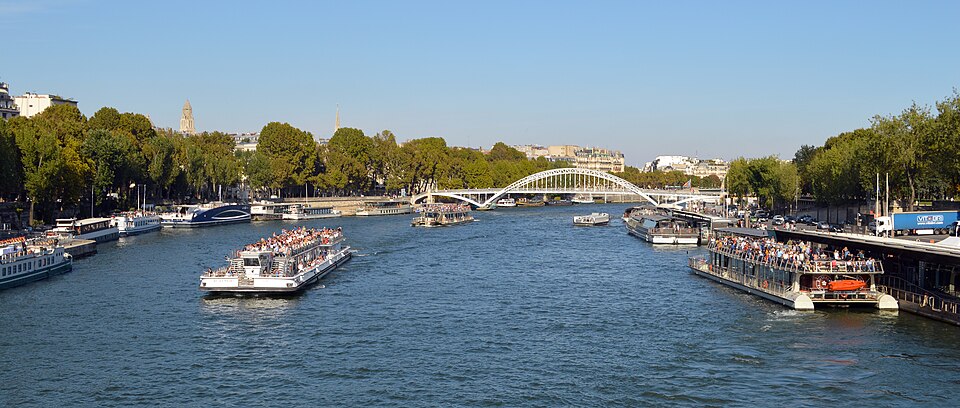
Start at Notre-Dame when it opens, then cross to Sainte-Chapelle for your timed slot (go on a sunny morning for the stained glass). Walk over to the Latin Quarter for lunch, then stroll through the Luxembourg Gardens and Saint-Germain-des-Prés. Spend the late afternoon at the Musée d'Orsay. At dusk, take a one-hour Seine cruise from near the Eiffel Tower or Pont Neuf, and stay to see the tower sparkle for five minutes at the top of each hour after dark.
- Day 2
The Louvre to the Arc de Triomphe
Be at the Louvre for opening with a timed ticket and give it three hours. Walk through the Tuileries Garden to the Musée de l'Orangerie for Monet's Water Lilies (closed Tuesday), then cross Place de la Concorde and walk the Champs-Élysées. Climb the Arc de Triomphe around sunset for the view down the avenues. Dinner in the 8th or back in your neighborhood.
- Day 3
Marais, Montmartre and the Eiffel Tower
Spend the morning in the Marais: Place des Vosges, the free Musée Carnavalet, falafel on Rue des Rosiers. After lunch, take the Métro to Abbesses and wander up through Montmartre to Sacré-Cœur. In the evening, go up the Eiffel Tower on a pre-booked slot, or skip it and watch the lights from the Trocadéro.
Five days in Paris
With five days you can slow down, add Versailles and see some neighborhoods that most short-trip visitors miss.
- Day 1
Islands and Latin Quarter
Notre-Dame, Sainte-Chapelle and the Conciergerie in the morning. Lunch near Place Maubert, then the Panthéon and the Musée de Cluny, and a sunset walk along the Seine quays past the green booksellers' boxes.
- Day 2
Louvre and the grand axis
Louvre at opening, then the Tuileries, the Orangerie, Place de la Concorde and the Champs-Élysées. Climb the Arc de Triomphe late afternoon. Dinner in South Pigalle.
- Day 3
Versailles
Take the RER C or a train from Saint-Lazare or Montparnasse to Versailles; any single regional ticket covers it since the 2025 fare reform. Arrive at opening with a timed ticket, see the palace first, then the gardens and the Trianon estate. Avoid Mondays (closed) and summer Tuesdays and Sundays (busiest). Back in Paris for a late dinner. See day trips.
- Day 4
Eiffel Tower, Invalides and Saint-Germain
Eiffel Tower in the morning with a pre-booked slot. Walk to the Musée Rodin and its sculpture garden, then the Invalides and Napoleon's tomb. Spend the afternoon in Saint-Germain: Saint-Sulpice, the Luxembourg Gardens and a café terrace. Evening Seine cruise.
- Day 5
Marais, Montmartre or the east
Morning in the Marais (Musée Picasso, Carnavalet, Place des Vosges, Marché des Enfants Rouges for lunch). Afternoon either up in Montmartre and Sacré-Cœur, or at Père-Lachaise Cemetery and then along the Canal Saint-Martin for an apéritif by the water. Farewell dinner in the 11th.
Save money
On this five-day plan, a Paris Museum Pass can pay for itself if you visit four or more included sights in two days; see Paris sights for the math. For transit, a weekly Navigo pass beats single tickets if your stay falls within one Monday-to-Sunday week; see getting around Paris.
Paris practicalities
Sundays and Mondays
On Sundays, most supermarkets close by 1 p.m. and many shops stay shut all day. The exceptions are designated tourist zones, including the Marais, the Champs-Élysées, Saint-Germain, Montmartre and the big department stores on Boulevard Haussmann, where many shops open on Sunday afternoons. Open-air food markets run on Sunday mornings, and most bakeries open Sunday morning and close one other day.
Monday is the other tricky day. Many museums close (the Musée d'Orsay, Rodin, Picasso, Carnavalet, Petit Palais, Cluny and Versailles among them), as do many independent restaurants, which often close Sunday and Monday. The Louvre and the Orangerie close on Tuesday instead. Plan your Monday around the Louvre, Eiffel Tower, Arc de Triomphe, Sainte-Chapelle, Notre-Dame and a walking neighborhood. Check the Monday and Tuesday closing table on Paris sights.
Different from home
In August, many Parisians leave town, and some neighborhood bakeries, bistros and shops close for two to four weeks. Tourist areas stay open, but if a particular restaurant is a reason for your trip, check its summer closing dates. See when to go.
Public toilets
Paris has hundreds of free self-cleaning street toilets called sanisettes, recognizable as gray or brown kiosks on sidewalks, many open 24 hours. Wait for the door to close and the cleaning cycle to finish before you enter. Cafés technically reserve their toilets for customers, so order a coffee at the bar (the cheapest option, often €1.50–3) if you need one. Department stores, museums and big train stations have toilets; at stations they may cost €1 or so. Carry tissues and hand sanitizer, because paper sometimes runs out.
Free water and Wallace fountains
Paris tap water is safe and closely monitored. The city has more than a thousand public drinking fountains, including the dark green cast-iron Wallace fountains with four caryatids, a gift from the English philanthropist Richard Wallace in the 1870s and now a city symbol. A handful of fountains even dispense free sparkling water. Bring a refillable bottle. In restaurants, ask for "une carafe d'eau" for free tap water; servers will otherwise offer bottled water, which you pay for.
Smoking
Smoking is banned inside restaurants, bars and public buildings, but café terraces are a smoker's refuge, so a sidewalk table may come with secondhand smoke. Since July 2025, a national ban also covers parks and gardens, beaches, bus shelters, and areas near schools and sports grounds, with fines of €135 (about $150). If smoke bothers you, sit inside or on a fully open terrace upwind.
Noise, dog mess and other street realities
- Noise: sirens, scooters, early deliveries and late-night bar crowds are part of life in lively areas. Pack earplugs and ask for a courtyard room.
- Dog mess: much better than its reputation from the 1990s, thanks to fines and street cleaning, but still common on some sidewalks. Watch your step, especially at night.
- Cigarette butts and litter: the city cleans streets daily, often with water trucks early in the morning, so wet sidewalks at dawn are normal.
- Protests: marches (manifestations) happen often, usually announced, mostly peaceful, and centered on Place de la République, Bastille and Nation. Steer clear and check the news. See safety.
- Pickpockets: the main crime risk for visitors, especially in the Métro, around the Eiffel Tower, the Louvre and Sacré-Cœur. See safety and scams.
Heat
Paris summers have grown much hotter. The city's record is 108.7°F (42.6°C), set in July 2019, and heat waves above 95°F (35°C) now arrive most summers. Many older hotels, apartments and Métro lines have no air conditioning, and top-floor rooms under zinc roofs get very hot. In June to August, book a room with AC, plan museums for the afternoon and walks for the morning and evening, carry water, and use the city's "cool islands" (îlots de fraîcheur), including shaded parks, cooled public buildings and the misting fountains set up during heat waves. Parks sometimes stay open all night during extreme heat. During a 2025 heat wave, even the Eiffel Tower's summit closed for two days.
What has changed: 2024 to 2026
Paris has changed more in the last few years than in the previous several decades, much of it accelerated by the 2024 Olympics. If your last visit was before 2023, here is what is new.
- Swimming in the Seine: after a century-old ban, the city opened three free supervised swimming spots in the river in July 2025: Bras Marie (4th, by the Île Saint-Louis), Bercy (12th) and Grenelle (15th, near the Eiffel Tower). They operate in summer only, from about early July to the end of August, and close on days when rain affects water quality, signaled by flags. Bring a swimsuit; there are changing areas and lifeguards. The canal basin at La Villette has had summer swimming since 2017. Check the city's site, paris.fr, for each season's dates and conditions.
- Limited-traffic zone: since November 2024, through traffic is banned for private cars in the 1st to 4th arrondissements (the historic center on the Right Bank and the islands). You may only drive in with a destination, such as a hotel, garage or shop. Taxis, ride-hail cars, buses, deliveries and bikes are not affected, so this mostly makes the center calmer to walk. Another good reason not to drive in Paris; see driving.
- More pedestrian and green streets: in a March 2025 vote, Parisians approved turning about 500 more streets into car-free or planted streets over the coming years, adding to the hundreds of "rues aux écoles" closed to traffic outside schools. Expect works sites and pleasant new pedestrian stretches.
- Bike lanes everywhere: the network of protected lanes keeps growing, with the Rue de Rivoli as the flagship east–west route reserved for bikes, buses and taxis. Bikes now outnumber cars at many central intersections at rush hour. See getting around for Vélib.
- No rental e-scooters: shared e-scooters were banned in 2023 after a public vote. E-bikes from Vélib, Lime and others remain.
- Ring road speed: the Périphérique dropped to 50 km/h (31 mph) in October 2024.
- Notre-Dame reopened in December 2024 after the 2019 fire, and its towers reopened to visitors in September 2025. Entry to the cathedral is free.
- The Grand Palais reopened in 2025 after a major restoration; the Centre Pompidou closed in September 2025 for renovation until about 2030; and the Catacombs reopened in April 2026 after a renovation.
- Louvre changes: after the October 2025 crown jewels theft, security was tightened, and from January 2026 visitors from outside the European Economic Area pay a higher admission price. See Paris sights.
- Transit: Métro line 14 has run to Orly airport since June 2024, paper tickets are no longer sold (the last ones stop working in the Métro on December 15, 2026), single fares became flat-rate in 2025, and the RoissyBus to CDG stopped in 2026. Bank-card tap-to-pay is spreading, starting with buses. The CDG Express airport train is due in March 2027.
Paris on a budget vs splurge
Paris can cost as much as New York, but it rewards budget travelers more than most big cities: the best experiences, like walking the quays, sitting in a park or browsing a market, cost nothing. See the budget planner and free things in Paris for more.
| Experience | On a budget | Splurge |
|---|---|---|
| Art | Free permanent collections at the city museums, including the Petit Palais, Carnavalet and Musée d'Art Moderne; under-18s free at national museums | Private early-entry or after-hours tour of the Louvre or Versailles |
| Views | Free views from the Sacré-Cœur steps, Parc de Belleville and the Galeries Lafayette rooftop | Eiffel Tower summit with a glass of Champagne at the top-floor bar |
| Lunch | Picnic from a market and a bakery in the Luxembourg Gardens; falafel in the Marais | Lunch menu at a Michelin-starred restaurant, often far cheaper than dinner |
| Dinner | Bistro set menu (formule) for €20–30 in the 10th, 11th or 13th | Tasting menu at a three-star restaurant, or a dinner cruise on the Seine |
| River | Sunset walk along the quays; picnic on the Square du Vert-Galant at the tip of the Île de la Cité | Private boat charter for an evening on the Seine |
| Night out | Wine bar apéritif and canal-side drinks | Cocktails at the Ritz's Bar Hemingway, a cabaret show at the Moulin Rouge, or the ballet at the Palais Garnier |
| Getting around | Walk, plus a weekly Navigo pass for €32.40 | Private driver and guide for the day |
Save money
Eat your main meal at lunch, when many restaurants offer a fixed-price menu for much less than dinner; drink coffee standing at the bar, which is cheaper than at a table; and order the house wine by the carafe (pichet). Tipping is optional because service is included by law. See money and tipping and eating in Paris.
More on Paris
- Paris sights and museums: prices, hours, booking, the Museum Pass and free days
- Getting around Paris: airports, Métro, buses, taxis and bikes
- Eating and drinking in Paris: bistros, bakeries, markets and reservations
- Shopping and nightlife: department stores, flea markets, bars and shows
- Paris with kids and free things to do
- Day trips from Paris: Versailles, Giverny, Champagne, Normandy and more
- Where to stay in France: hotels, apartments and booking tips
Add it to a route in the trip builder, or ask us to plan the hotels, trains and guides for you.